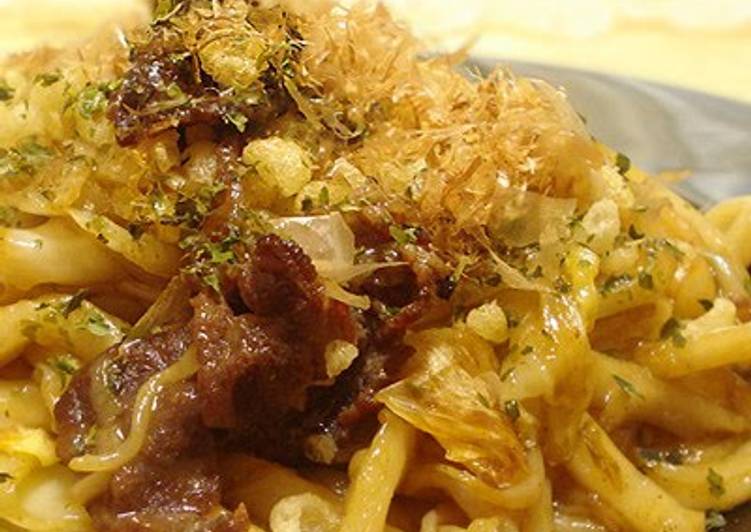
Hello everybody, welcome to our recipe site, if you're looking for An Osaka-native's Sauce Yakisoba (or Stir-fried Udon Noodles) recipe, look no further! We provide you only the best An Osaka-native's Sauce Yakisoba (or Stir-fried Udon Noodles) recipe here. We also have wide variety of recipes to try.
Before you jump to An Osaka-native's Sauce Yakisoba (or Stir-fried Udon Noodles) recipe, you may want to read this short interesting healthy tips about Methods To Live Green And Save Money In The Kitchen.
It was not really that long ago that hippies and tree huggers were the only ones to show concern regarding the well-being of the surroundings. That has totally changed now, since we all seem to have an awareness that the planet is having troubles, and we all have a part to play in fixing it. Unless everyone begins to start living more environmentally friendly we won’t be able to correct the problems of the environment. This should happen soon and living in approaches more friendly to the environment should become a mission for every individual family. The cooking area is a good starting point saving energy by going more green.
Refrigerators and freezers use a lot of electricity, particularly when they are not operating as economically as they should. If you can get a new one, they use about 60% less than the old ones that are more than ten years old. The appropriate temperature for food is 37F within the fridge and 0F in the freezer, and sticking to these will use less electricity. You can cut down how often the motor has to run by frequently cleaning the condenser, which will save on electricity.
As you can see, there are plenty of little items that you can do to save energy, as well as save money, in the kitchen alone. Natural living is actually something we can all perform, without difficulty. It’s related to being sensible, more often than not.
We hope you got insight from reading it, now let’s go back to an osaka-native's sauce yakisoba (or stir-fried udon noodles) recipe. To make an osaka-native's sauce yakisoba (or stir-fried udon noodles) you only need 12 ingredients and 18 steps. Here is how you achieve it.
The ingredients needed to cook An Osaka-native's Sauce Yakisoba (or Stir-fried Udon Noodles):
- Get 1 bag Chinese-style noodles or udon noodles (as thick and chewy as possible)
- Use 3 leaves Cabbage
- Prepare 1 to 2 handfuls Bean sprouts
- Provide 1 Thinly sliced pork or beef
- You need 50 ml Dashi stock (about the concentration for miso soup)
- Prepare 40 to 60 ml Otafuku Okonomiyaki sauce orsauce
- Use 30 ml for udon noodles 20 ml for yakisoba … this is enough for up to two portions of noodles Sake (always use real sake, not cooking sake)
- Prepare 1 Vegetable oil
- Provide 1 Salt and pepper … A
- Use 1 Tempura crumbs … B
- Prepare 1 Bonito flakes … B
- Use 1 Aonori … B
Steps to make An Osaka-native's Sauce Yakisoba (or Stir-fried Udon Noodles):
- Cut the vegetables and meat into bite-sized pieces. *In this case, it's better to tear the cabbage by hand instead of cutting it into neat pieces.
- Prepare the dashi stock, it can be dash stock powder dissolved in hot water. *Speed is essential, so prepare the sauces now too.
- Take the noodles out of the refrigerator and place on a plate. Sprinkle sake over it and lightly cover with plastic wrap. *Microwave until the noodles are warm (it takes me about 1.5 minutes at 600 W).
- Many people warm the noodles in the bag, but a popular store told me it's better to prepare the noodles with the method in Step 3. This is essential!!
- Put vegetable oil in a frying pan, and heat over high. Put the meat in first and season with the A ingredients. When the meat is almost cooked through, add the vegetables. Season again with the A ingredients and stir-fry.
- Once the Step 5 vegetables have softened up, add the Step 3 noodles (do not add sake on the plate). Add the Step 2 dashi stock, and untangle the noodles while cooking over high heat.
- When the Step 6 noodles have untangled and about 90% of the dashi stock has evaporated, add the Step 2 sauce. Mix quickly and put on a serving plate.
- In Step 7, make sure you mix the sauce with the remaining dashi stock that hasn't been fully evaporated. This is important!!
- From Step 6 onwards, the process up until plating should take about 20 to 30 seconds.
- If you take your time here, the noodles will not only dry out, but start tasting like the instant kind.
- After serving onto a plate, top with the B ingredients and it's ready. Adding mayonnaise or chili pepper powder to taste is also yummy.
- Noodles that have dried out are never good. The sauce sticks well onto chewy noodles that have a slippery surface. This way, the noodles will taste exactly like what you'd get at a restaurant.
- I always use this type of sauce which is on the sweeter side. This company also makes "Yakisoba Sauce" but I like to use the "Okonomi" type.
- But, if you can't find it, try using the"Fake Otafuku type Okonomi Sauce".
- I tried various types of sauce for this recipe before posting it. The amount needed is the same at 40 to 60 ml.
- Always use thick noodles… Thin noodles will become soggy and mushy.
- To make the noodles as yummy as those cooked at restaurant griddles, make sure to keep the frying pan or electric griddle on high heat.
- The dashi stock added in Step 6 should evaporate if the heat is kept on high. This is an important point for keeping the noodles chewy.
If you find this An Osaka-native's Sauce Yakisoba (or Stir-fried Udon Noodles) recipe useful please share it to your close friends or family, thank you and good luck.